
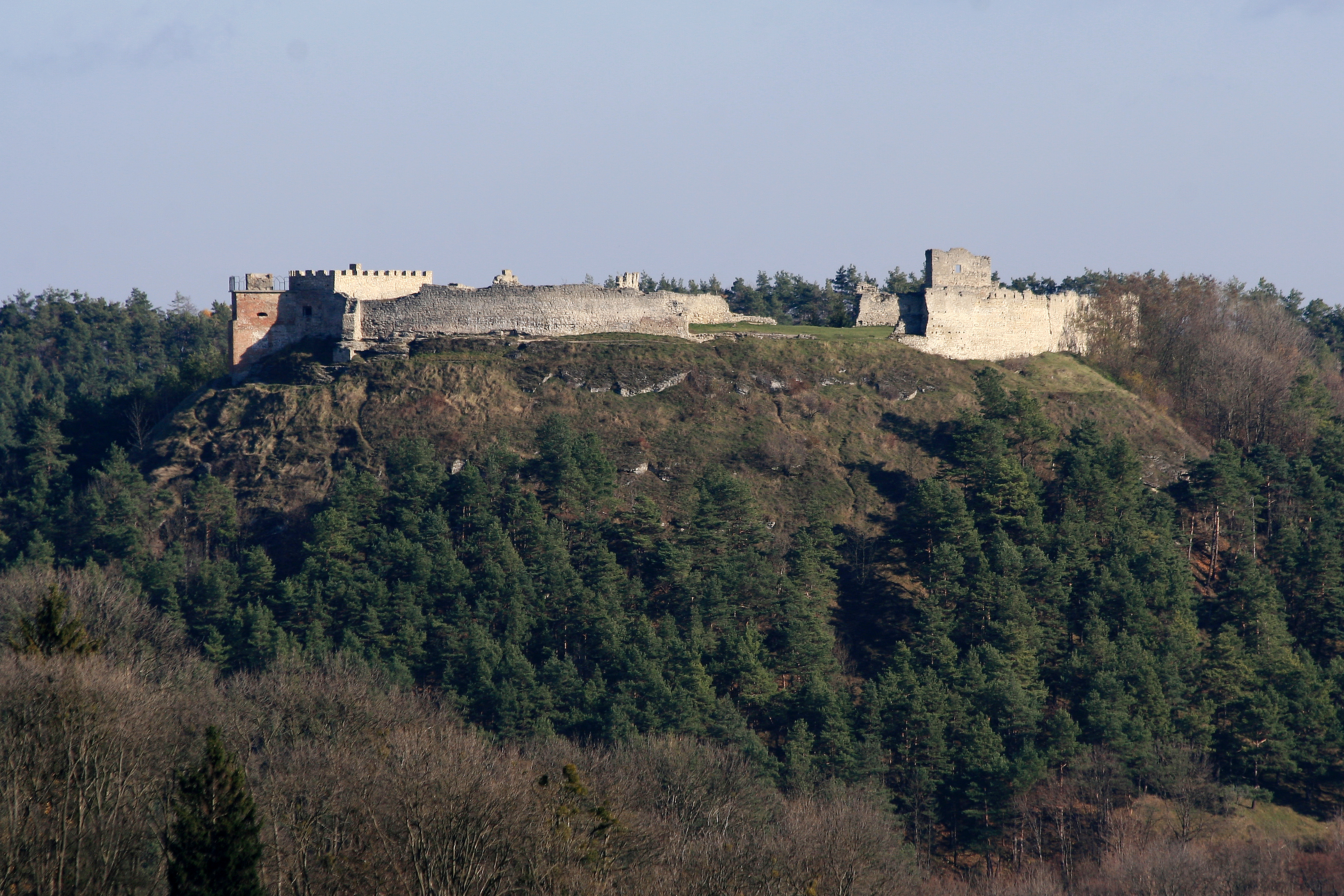
Kremenets Castle
The legendary fortress on God's Mountain — an impregnable citadel of Volhynia
About This Site
Kremenets Castle is a 13th-century medieval fortress atop the 400-meter Castle Hill (Bona Hill), remaining as a symbol of the indomitable spirit of the Ukrainian people and one of the oldest defensive structures in Volhynia.
Kremenets Castle stands majestically atop the 400-meter Castle Hill in the city of Kremenets, Ternopil Oblast. This magnificent medieval fortress ruin is one of Ukraine's oldest surviving defensive fortifications. The castle impresses with its strategic location on a steep rocky hill, which ensured its reputation as an impregnable citadel for centuries. Built from local limestone in the 13th century, the castle had an inner courtyard of approximately 8,000 square meters, surrounded by high stone walls up to 2 meters thick and 8 meters high. The complex included three towers: the entrance gate to the north, the New Tower to the west, and the Black Tower. Inside the castle walls were 34 wooden buildings of wealthy townspeople, living quarters, the Chapel of St. Michael, provision warehouses, a bakery, and underground barracks. The castle gained its greatest fame through successful defense against numerous attacks: Hungarian forces, the Mongol-Tatar hordes of Batu Khan (1240-1241), and Tatar raids of the 15th-17th centuries. The fortress earned a reputation as impregnable and was taken by storm only once in its history — in September 1648 by Cossack forces under Colonel Maksym Kryvonis after a month and a half of siege. The hill is often called Bona after Italian Princess Bona Sforza, wife of Polish King Sigismund I, who owned the castle from 1536-1556. During her reign, fortifications were strengthened, a deep well was dug, and new towers were built. The princess is shrouded in numerous legends about the search for eternal youth and hidden treasures. Today, Kremenets Castle is part of the Kremenets State Historical-Architectural Reserve and a popular tourist destination offering incomparable panoramic views of the city and surroundings.
Historical Significance
The first written mentions of Kremenets as a fortified town date back to 1064, when Polish Prince Bolesław II the Generous encountered the fortress as an obstacle during his Kievan campaign. Archaeological research in the 1970s confirmed that fortifications at this site existed as early as the 8th-9th centuries. The castle whose ruins survive today was founded in the 1290s at the initiative of Volhynian Prince Mstislav Danilovych. During this period, the fortress area increased fourfold compared to previous fortifications, and the perimeter was encircled by a powerful stone wall. In the 14th century, after the collapse of the Galicia-Volhynia Principality, Poland, Hungary, and Lithuania fought over the castle. In 1396, the fortress came under the control of Lithuanian Grand Duke Vytautas, who restored and strengthened the fortifications. The castle became a royal prison for the disgraced Prince Švitrigaila (1370-1452), who later himself became Grand Duke of Lithuania. In the 15th-17th centuries, the castle, as part of the Polish-Lithuanian Commonwealth, became a frontier fortress against Tatar lands. Numerous Tatar raids could not overcome the powerful fortifications. In 1536, King Sigismund I gifted the castle to his wife, Italian Princess Bona Sforza, who during 20 years of rule invested significant funds in modernizing the fortress, building three new towers, warehouses, barracks, and digging a deep well. The castle's final trial came in September 1648 during the liberation war under Bohdan Khmelnytsky. Cossack forces under Colonel Maksym Kryvonis stormed the fortress for a month and a half. After the castle's fall, it was never rebuilt and remained in ruins. In the 1970s, archaeological excavations were conducted at the castle site, and in the 1990s it became part of the Kremenets State Historical-Architectural Reserve.
Kremenets Castle is a monument of national significance and a unique example of medieval defensive architecture in Ukraine. It demonstrates the evolution of fortification art from early wooden-earthen fortifications of the 8th-9th centuries to a powerful stone fortress of the 13th-17th centuries. The castle has preserved authentic elements of Gothic defensive architecture, including a gate with a pointed arch, remains of three towers, and fragments of high stone walls. Its strategic location on a 400-meter hill makes it one of Ukraine's highest castles and provides stunning panoramic views. The castle is listed in the State Register of Immovable Monuments of Ukraine under number 190023 and is an important part of the Ternopil region tourist route.
Highlights
- ✓Location on a 400-meter hill with panoramic views
- ✓Authentic ruins of a 13th-century medieval fortress
- ✓Remains of three towers: entrance gate, New Tower, and Black Tower
- ✓Fragments of stone walls up to 8 meters high
- ✓Gothic gate with pointed arch
- ✓Legends about Princess Bona Sforza and hidden treasure
- ✓One of the highest castles in Ukraine
Photo Gallery


Plan Your Visit
Opening Hours
Open year-round
May - September
Daily: 09:00 - 20:00
October - April
Daily: 09:00 - 18:00
Admission
Children under 7 - free. Entry to castle grounds is free, fee for guided tours
Contact
Getting There
🚗 By Car
From Kyiv - 400 km via M06 highway through Zhytomyr and Khmelnytskyi (about 5 hours). From Lviv - 150 km via E40 through Ternopil (about 2 hours). From Ternopil - 60 km via T0611 (about 1 hour)
🚌 Public Transport
By bus or minibus to Kremenets center, then walking ascent to Castle Hill (about 30 minutes)
🅿️ Parking
Parking at the foot of Castle Hill, then walking ascent
Facilities
Similar Heritage Sites

Dubno Castle
The impregnable stronghold of Ostroh princes — one of the seven wonders of Ukrainian castles
Learn More →
Kamianets-Podilskyi Castle
An impregnable citadel standing through the centuries
Learn More →
Lutsk Castle (Lubart's Castle)
Medieval 14th-century castle - winner of 'Seven Wonders of Ukraine' competition
Learn More →