
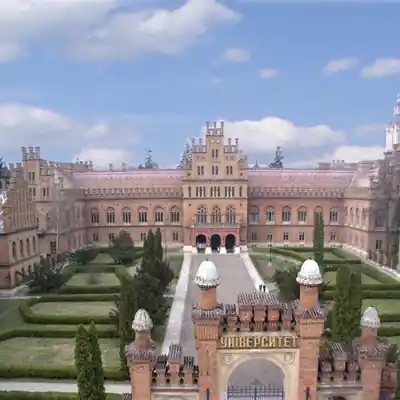
Residence of Bukovinian and Dalmatian Metropolitans
A masterpiece of 19th century historicist architecture and UNESCO site
About This Site
The Residence of Bukovinian and Dalmatian Metropolitans is an outstanding example of 19th century architecture, built by Czech architect Josef Hlavka in 1864-1882. Today the building houses the main campus of Chernivtsi National University.
The Residence of Bukovinian and Dalmatian Metropolitans represents a masterful synergy of architectural styles created by Czech architect Josef Hlavka between 1864 and 1882. The complex includes a seminary and monastery, dominated by the domed, cruciform Seminary Church with a garden and park. The architectural ensemble expresses cultural influences from the Byzantine period onward and embodies the powerful presence of the Orthodox Church during Habsburg rule, reflecting the Austro-Hungarian Empire's policy of religious tolerance. The complex combines elements of national, Byzantine, Gothic and Baroque architecture. In 1955, the building was transferred to Yuriy Fedkovych Chernivtsi National University. In 2011, the residence was inscribed on the UNESCO World Heritage List as an outstanding example of 19th century historicist architecture.
Historical Significance
Construction of the residence began in 1864 according to the design of Czech architect Josef Hlavka and continued until 1882. The complex was created as the residence of the metropolitans of the Orthodox Church of Bukovina and Dalmatia during the reign of the Austro-Hungarian Empire. Architect Hlavka created a unique architectural ensemble combining different styles: Byzantine, Gothic, Baroque and Moorish. The central structure is the domed Seminary Church of the Three Saints, surrounded by the Synod Hall, library, residential premises and garden. In 1945, the complex was declared a national park. In 1955, the residence was transferred to Chernivtsi National University. Today thousands of students study here, and the architectural ensemble remains one of the most beautiful university buildings in Europe.
The Residence is an exceptional example of 19th century historicist architecture expressing the cultural identity of the Orthodox Church within the Austro-Hungarian Empire. The complex demonstrates the policy of religious tolerance and cultural diversity that characterized the Habsburg Empire. The architectural synthesis of different styles makes the residence a unique monument of European cultural heritage.
Highlights
- ✓UNESCO World Heritage Site (2011)
- ✓Synthesis of Byzantine, Gothic and Baroque architecture
- ✓Marble, Blue and Red Halls
- ✓Domed Church of the Three Saints
- ✓Historic garden and park
- ✓Working university
- ✓Architect Josef Hlavka
Photo Gallery


Plan Your Visit
Opening Hours
Open year-round
Summer period
Monday-Thursday: 10:00 - 17:00
Summer period
Friday-Sunday: 10:00 - 19:00
Admission
Group tours (9+ people) - 80 UAH per person
Contact
Getting There
🚗 By Car
5-10 minutes by car from city center
🚌 Public Transport
Trolleybuses and minibuses stop near the university. 'University' stop
🅿️ Parking
Limited parking near the university
Facilities
Similar Heritage Sites
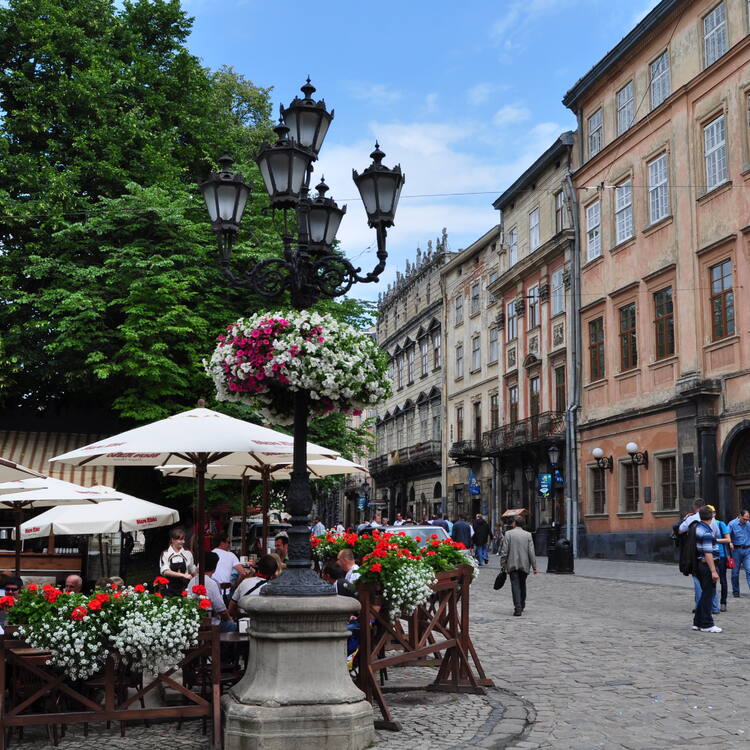
L'viv Historic Centre
Medieval pearl with European charm
Learn More →
Saint-Sophia Cathedral in Kyiv
The oldest monument of 11th century Byzantine architecture in the heart of Kyiv
Learn More →.JPG)
Church of the Descent of the Holy Spirit (Potelych)
The oldest wooden church in Lviv Oblast, built in 1502
Learn More →